18-Month-Old Not Talking? How ABA Therapy Can Help

In short: An 18-month-old who isn't talking yet may have a speech delay, which can be an early sign of autism or other developmental differences. Applied behavior analysis (ABA) therapy, led by a BCBA, can help build communication skills through play-based, positive reinforcement strategies. Early intervention is key, and most insurance plans, including Medicaid, cover ABA therapy. Start with ABA is a free service that matches families with vetted, BCBA-led providers.
Key takeaways
- Speech delays at 18 months can be an early sign of autism or other developmental conditions, but not always.
- Early intervention, including ABA therapy, can dramatically improve communication and social skills in toddlers.
- ABA therapy for young children focuses on functional communication, play, and reducing challenging behaviors.
- Free evaluations are available through your state's Early Intervention program (Part C of IDEA).
Find your child's ABA provider
About 60 seconds · free & confidential
- ✓ Vetted, BCBA-led providers
- ✓ In-home, center & telehealth
- ✓ No obligation, ever
What Does It Mean When an 18-Month-Old Is Not Talking?
Every child develops at their own pace, but language milestones provide helpful guideposts. By 18 months, most toddlers can say at least a few words-often around 10 to 20-and understand many more. They may point, wave, and use gestures to communicate. If your 18-month-old is not talking or saying very few words, you may be wondering what's normal and when to worry.
A delay in expressive language does not automatically mean autism. Hearing issues, oral-motor problems, or simply being a late bloomer can also play a role. However, a significant speech delay can be an early sign of autism spectrum disorder (ASD). Other red flags include lack of eye contact, not responding to their name, limited gestures (like pointing), and little interest in playing with others. A thorough evaluation is the best way to understand what's happening.
🔗 Related reading: ABA for Mild Autism: Is It Worth It? · Local ABA Therapy
When to Seek Help: Early Intervention and Evaluation
If you are concerned about your toddler's communication, do not wait. The earlier you seek help, the better the outcomes. In the United States, every state offers an Early Intervention program under Part C of the Individuals with Disabilities Education Act (IDEA). These programs provide free evaluations for children from birth to age 3. You can request an evaluation without a doctor's referral-simply contact your state or county's early intervention office.
What Happens During an Early Intervention Evaluation?
A team of specialists-such as a developmental pediatrician, speech-language pathologist, and psychologist-will assess your child's communication, motor skills, social-emotional development, and adaptive behaviors. They use play-based activities and parent interviews to gather information. If a delay or disability is identified, the team will develop an Individualized Family Service Plan (IFSP) outlining the services your child needs, which may include speech therapy, occupational therapy, or ABA therapy.
It is important to note that an evaluation does not automatically lead to an autism diagnosis. The team will provide recommendations based on your child's specific strengths and challenges. A diagnosis, if given, can open doors to more specialized therapies like ABA.
Looking for ABA therapy for your child? We match families with vetted, BCBA-led providers near you.
Get matched freeCould ABA Therapy Help an 18-Month-Old Who Isn't Talking?
Applied behavior analysis (ABA) therapy is an evidence-based approach often used for children with autism. But can it help a toddler who is simply not talking yet? Yes-especially if the delay is part of a broader developmental difference. ABA focuses on understanding and improving socially significant behaviors, including communication.
For toddlers, ABA therapy uses naturalistic teaching strategies. A Board Certified Behavior Analyst (BCBA) designs a program that weaves learning into everyday play and routines. The goal is not just to get a child to say words, but to build functional communication-meaning the child learns to express wants, needs, and feelings in a way that works for them. This might include spoken words, sign language, picture exchange systems, or speech-generating devices.
Research shows that early intensive behavioral intervention, a type of ABA, can significantly improve language and cognitive outcomes in young children with autism. Even if your child does not have an autism diagnosis yet, ABA can be recommended for developmental delays when other therapies are not enough. Always consult with your pediatrician and an ABA provider to determine the best path.

🔗 Related reading: Hand Flapping in 2-Year-Olds: Autism or Normal? · Nearby ABA Therapy
How ABA Therapy Addresses Communication Delays
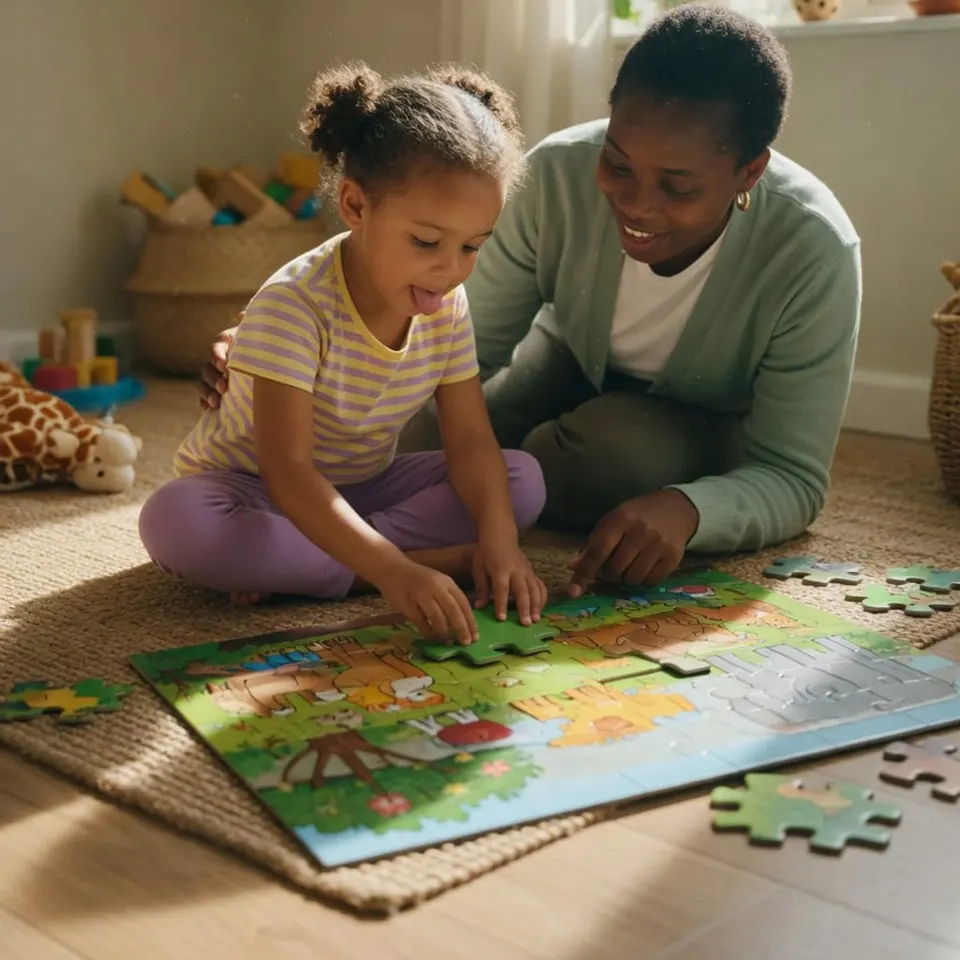
ABA therapy is not about drilling words repetitively. For an 18-month-old, therapy looks like structured play, with the BCBA or a registered behavior technician (RBT) following the child's lead to create moments of learning.
Key Techniques Used in ABA for Toddlers
- Natural Environment Teaching (NET): The therapist embeds learning in activities the child already enjoys-like rolling a ball back and forth while saying 'go' or 'my turn.'
- Mand Training: 'Mand' means request. The therapist teaches the child to request preferred items or actions, starting with simple gestures or sounds and gradually shaping toward words.
- Modeling and Imitation: The therapist models sounds, words, and actions, and reinforces the child's attempts to imitate. This builds the foundation for verbal speech.
- Reinforcement: Every successful communication attempt is rewarded with something the child loves-a toy, a snack, or praise. This motivates the child to try again.
- Functional Communication Training (FCT): If the child uses challenging behaviors (like crying or hitting) to get needs met, the therapist teaches a more appropriate way to communicate, such as pointing or saying a word.
ABA is highly individualized. A BCBA will assess your child's current communication level and set small, achievable goals. Progress is measured daily, so the program adapts quickly. For a child who is not talking, the first goal might be to make eye contact or to reach for a toy, and later to vocalize a sound. Over weeks and months, these small steps build into real language.
What to Expect in ABA Therapy for a Toddler
ABA therapy for a very young child is different from older children. Sessions are typically shorter-from 1 to 2 hours-and happen in the home, daycare, or clinic. The environment is set up to be low-stress, with toys and activities that the child finds motivating.
Initial Assessment and Goal Setting
Before therapy begins, a BCBA will conduct a comprehensive assessment. This includes parent interviews, direct observation, and sometimes standardized tools. They will identify skill deficits, preferred items, and any challenging behaviors. Then they write a treatment plan with measurable goals. For a child not talking, goals might include:
- Respond to their name 80% of the time within 5 seconds
- Use 5 signs or words to request preferred items
- Imitate 10 different sounds or actions
- Point to a desired item when prompted
Parent Involvement
Parents are essential partners in ABA. The BCBA will teach you how to reinforce communication throughout your daily routine. Consistency across settings helps the child generalize skills. You might be asked to practice during meals, bath time, or play. Some programs also offer parent training sessions.
Sessions are data-driven. The therapist records every trial, so you can see progress-even if it feels slow. The goal is always to make learning fun and natural, not stressful.

Insurance, Costs, and How Start with ABA Can Help
ABA therapy can be expensive without coverage. Hourly rates can range from $60 to $150 per hour depending on location and provider. However, this cost is usually covered by health insurance when medically necessary.
Insurance Coverage for ABA
Most private health insurance plans, including those purchased through the Affordable Care Act marketplace, cover ABA therapy for autism. Many states have mandates requiring coverage. Medicaid, the government health program for low-income families, also covers ABA in all states, though specific policies vary. If your child has a diagnosis of autism or a developmental delay that qualifies, ABA should be covered.
You will likely need a prescription or referral from your child's doctor. The ABA provider will submit a treatment plan to your insurance for approval. Your out-of-pocket costs depend on your plan-some have copays, others apply deductible. Free services may be available through school districts or early intervention programs, but these may offer limited hours.
Start with ABA: Your Free Matching Service
Finding the right ABA provider can be overwhelming, especially when you're navigating a new diagnosis. Start with ABA is a completely free service that helps families like yours. We maintain a network of vetted, BCBA-led providers across the country. You simply tell us your location and insurance details, and we match you with providers who have availability and expertise working with young children.
We do not charge families anything-our service is funded by the providers who pay to be in our network. This means you get personalized recommendations without any hidden fees or obligations. We also help you understand what to ask during consultations and how to verify insurance coverage.
Tips for Parents While Waiting for Services
Getting a diagnosis, an evaluation, and therapy started can take time. Here are some things you can do at home to support your 18-month-old's communication:
- Talk to your child constantly, narrating your actions ('Mommy is pouring milk. Now we drink.'). Use simple words and exaggerated intonation.
- Read together every day. Point to pictures and name them. Let your child turn pages.
- Imitate your child's sounds and actions. If they babble, babble back. This encourages turn-taking.
- Use gestures like pointing, waving, and nodding. Pair them with words.
- Limit screen time. Real-life interaction is best for language development.
- Follow your child's interests. If they love cars, talk about the car's color, size, and sound while playing.
Also, do not hesitate to ask for help. Connect with other parents, join support groups, and rely on professionals. You are not alone.
Common Mistakes to Avoid
Parents often wonder if they caused the delay or worry about doing the wrong thing. Steer clear of these pitfalls:
- Waiting too long to seek an evaluation. Hope is not a strategy. Early evaluation can lead to early help.
- Comparing your child to others. All children develop differently, but professional guidance is essential.
- Assuming it's 'just a phase.' A persistent speech delay should be investigated.
- Forcing your child to speak. Pressure can create frustration. ABA uses positive reinforcement, not demands.
- Ignoring your own needs. Caring for a child with a delay is stressful. Take breaks and seek support.
Next Steps: How Start with ABA Can Connect You Today
If your 18-month-old is not talking, you have taken a brave and important step by learning more. The next step is to reach out for an evaluation. Contact your state's Early Intervention program to start the process. Simultaneously, you can prepare for potential ABA therapy by exploring providers.
Remember, ABA therapy is not just for children who are already diagnosed with autism-it can also help those with significant communication delays when recommended by a professional. Start with ABA is here to guide you through finding a qualified, BCBA-led provider who specializes in early intervention. Our matching service is free, fast, and tailored to your needs.
Visit startwithaba.com today to fill out a short form. We will reach out with provider options in your area, saving you hours of research. You deserve support, and your child deserves the best possible start.